The first time you lower your face into clear Bahamian water and see a reef moving beneath you, the question of whether you are a strong swimmer can feel much less important. But it still matters for safety. Can non swimmers snorkel safely? Often, yes – when the experience is designed for beginners, conditions are calm, and you use the right flotation with a crew that stays attentive.
Snorkeling is not the same as swimming laps in a pool. You are floating at the surface, breathing through a snorkel, and looking down at the underwater world. Still, open water can feel unfamiliar. A safe first snorkel is about feeling supported, never rushed, and knowing that it is completely fine to enjoy the view from the boat if the water does not feel right that day.
Can Non Swimmers Snorkel Safely in the Bahamas?
Yes, many non-swimmers enjoy snorkeling in the Bahamas, especially at sheltered, shallow sites with excellent visibility. Clear water can make a major difference for first-timers. When you can easily see the sea floor, the boat, and your guide, the experience tends to feel far less intimidating.
The key is choosing a tour that treats snorkeling as a guided activity, not a test of confidence. A quality crew should explain the plan before anyone enters the water, point out the safest area to explore, and keep an eye on guests throughout the stop. On a private or semi-private boat experience, there is also more room to move at your own pace rather than feeling pushed to keep up with a large group.
That said, non-swimmers should be honest about their comfort level. If waves are choppy, currents are present, or you feel anxious after putting your face in the water, staying aboard is the smart choice. The best vacation memories come from enjoying yourself, not forcing an experience you are not ready for.
What Makes Snorkeling Safer for Beginners?
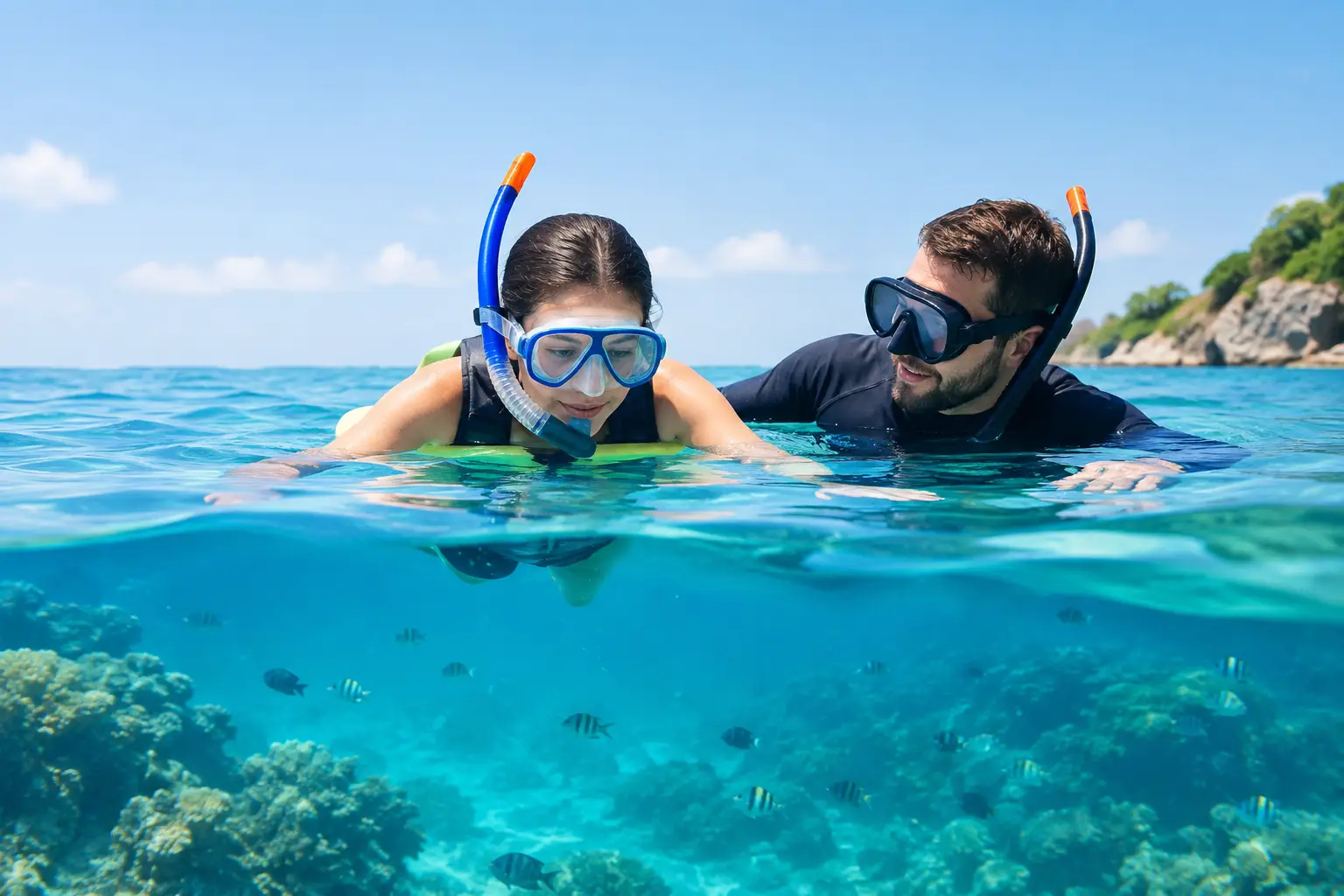
A properly fitted life jacket or snorkel vest is the biggest safety tool for a non-swimmer. It keeps you buoyant without requiring you to tread water, so you can relax your body and focus on slow breathing. Many guests prefer a life jacket because it feels secure right away. Others like an inflatable snorkel vest because it allows a little more freedom at the surface. Your crew can help you choose the option that feels most comfortable.
Mask fit is just as important. A leaking mask can make anyone feel stressed, especially on a first snorkel. Before entering the water, place the mask gently against your face without using the strap and inhale lightly through your nose. If it holds in place for a moment, the seal is likely good. Keep hair away from the silicone edge, and do not tighten the strap too much. An overly tight mask often leaks more, not less.
Your snorkel should feel simple, not complicated. Bite gently on the mouthpiece, seal your lips around it, and breathe slowly. Practice while standing in shallow water or while holding onto the boat ladder first. The goal is to prove to yourself that you can breathe comfortably before you begin floating away from the boat.
Start Small Before You Head Out
The easiest way to build confidence is to take the first few minutes slowly. Sit on the swim platform or boat ladder with your life jacket on. Put your face in the water, take a few calm breaths through the snorkel, and lift your head whenever you want. There is no prize for being first in the water.
Once you are ready, stay close to the boat or guide. Hold a flotation device if one is available, or keep a hand on the ladder until your breathing settles. Look straight down rather than trying to swim across the entire site. Even a few minutes of floating over coral, fish, or sandy patches can be a real snorkeling experience.
Many beginners make the mistake of kicking too hard. Fast kicking can splash water into the snorkel, tire you out, and raise anxiety. Use slow, easy kicks from the hips, or simply float while your guide helps position you. Let the flotation do its job.
Breathing Is the Part to Practice
Snorkeling can feel strange because your face is underwater while you breathe through your mouth. That sensation is normal. The best approach is to take slow, steady breaths and keep your head still. If water enters the snorkel, lift your head above the surface, remove the mouthpiece if needed, and reset. There is no need to panic or try to clear it while you are uncomfortable.
If you tend to feel nervous in water, tell the crew before the tour begins. A good guide would rather know in advance so they can offer extra reassurance, choose the easiest entry point, and keep you close during the swim stop.
Know When to Skip the Water
Being on a boat tour does not mean you have to snorkel at every stop. Conditions can change, and your comfort matters as much as the forecast. It may be better to sit out the snorkel portion if you are feeling seasick, tired, cold, panicked, or unsteady on the ladder.
You should also skip the water if you have an ear problem, a breathing condition that is not well controlled, or any health concern that makes open-water activity uncertain. Ask a medical professional before your trip if you are unsure. Children, older travelers, and anyone who has not been in the water for years can still have a wonderful day, but they may need a more cautious plan.
A responsible captain may decide that a location is not right for beginner snorkeling due to wind, waves, current, or boat traffic. That is not a disappointment – it is good judgment. The Bahamas has plenty of beautiful ways to enjoy the water, from scenic cruising and beach stops to watching sea life from the boat.
Choose the Right Tour, Not Just the Right Reef
For a non-swimmer, the crew and boat setup can matter as much as the snorkeling location. Ask whether flotation gear is provided, whether first-time snorkelers are welcome, and how guests enter and exit the water. A sturdy swim ladder, clear instructions, and a crew member in the water or nearby can make the experience feel far more manageable.
Smaller groups are often a better fit for nervous beginners because there is more personal attention. On a private charter, your group can spend more time getting comfortable and tailor the day around the activities everyone actually wants to do. That can be especially helpful for families where one person is eager to snorkel and another would rather enjoy the sunshine, photos, and turquoise views from the deck.
At Shore 2 Shore Bahamas, the goal is not to make guests prove anything. It is to create a fun, well-organized island day where everyone feels cared for, whether they snorkel for an hour, float near the boat, or simply take in the scenery.
A Simple First-Time Snorkeling Plan
Arrive ready to listen to the safety briefing, and let the crew know you do not swim. Wear your flotation device from the moment you enter the water. Practice breathing while close to the ladder, then stay within the area your guide recommends. Keep your movements slow, look down, and raise your head whenever you need a break.
It also helps to avoid alcohol before a snorkel stop and to drink water throughout the day. Sun, wind, and saltwater can tire you out faster than expected. Use reef-safe sun protection when possible, and follow your guide’s instructions about where not to stand or touch. Coral is fragile, and giving marine life space makes the experience better for everyone.
The right first snorkel should leave you feeling proud and excited, not exhausted. Start with the comfort of a life jacket, calm breathing, and a patient crew nearby. Then give yourself permission to enjoy the view at your own pace – a bright fish passing below you may be all the encouragement you need to try again.